In recent years, drones have revolutionized the field of search and rescue operations, providing first responders with a valuable tool to locate missing persons, assess damage, and deliver critical supplies. Equipped with advanced cameras, sensors, and GPS technology, these unmanned aerial vehicles can quickly scan vast areas, navigate through challenging terrain, and transmit vital information back to rescue teams. As the use of drones in search and rescue missions continues to grow, it’s essential to identify the most suitable and effective models for this critical application.
When it comes to selecting the right drone for search and rescue operations, several factors come into play, including flight time, range, camera resolution, and durability. With so many models available on the market, choosing the best drones for search and rescue can be a daunting task, especially for those who are new to drone technology. In this article, we’ll delve into the key features and specifications to consider when selecting a drone for search and rescue, and provide in-depth reviews of top-rated models that have proven themselves in real-world rescue operations. Whether you’re a seasoned search and rescue professional or just starting to explore the potential of drones in this field, this guide is designed to help you make an informed decision and find the perfect drone to support your life-saving work.
We will cover the best drones for search and rescue later in this article. Meanwhile, feel free to check out these related products on Amazon:
| # | Preview | Product | Price | |
|---|---|---|---|---|
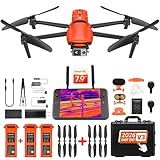
| 1 | Autel Robotics EVO II Dual 640T V3, 640x512 Thermal Imaging Drone, RemoteID… | $4,099.00 | View on Amazon | |
| 2 | Autel Robotics EVO II Dual 640T Enterprise V3, 640 * 512 T~hermal Imaging… | $4,599.00 | View on Amazon | |
| 3 | Drone Operations Manual: for Search & Rescue Teams | $15.40 | View on Amazon | |
| 4 | Search and Rescue with Drones: Where to Begin (Public Safety Series Book 1) | $7.75 | View on Amazon | |
| 5 | National Bird | $0.00 | View on Amazon |



As an Amazon Associate I earn from qualifying purchases.
Prices and availability are accurate as of November 26, 2026 23:50 and are subject to change.
Drones For Search And Rescue Overview
Drones for search and rescue operations have become increasingly popular in recent years due to their ability to quickly and efficiently locate missing people in a variety of environments. These unmanned aerial vehicles (UAVs) are equipped with advanced technology such as high-resolution cameras, thermal imaging, and GPS, allowing them to scan large areas and detect signs of life. This technology has proven to be invaluable in search and rescue missions, where every minute counts.
The use of drones in search and rescue operations has several advantages over traditional methods. For one, they can access areas that may be difficult or impossible for humans to reach, such as rugged terrain or disaster zones. Additionally, drones can cover large areas quickly, reducing the time it takes to locate missing people. They also provide real-time video feedback, allowing rescue teams to assess the situation and make informed decisions about how to proceed.
In search and rescue operations, drones can be equipped with a variety of payloads, including cameras, sensors, and communication equipment. They can be used to detect heat signatures, track movement, and even drop emergency supplies to those in need. The flexibility and versatility of drones make them an essential tool in search and rescue missions, and their use is becoming more widespread as the technology continues to evolve.
When it comes to choosing the best drones for search and rescue, there are several factors to consider, including the type of terrain, the weather conditions, and the specific requirements of the mission. By selecting the right drone for the job, search and rescue teams can increase their chances of success and save lives. With the continued advancement of drone technology, it is likely that we will see even more innovative applications of drones in search and rescue operations in the future.
The Best Drones For Search And Rescue
The
DJI Matrice 210 RTK #M210RTK-01
is a top-notch drone designed for search and rescue operations. It features a rugged design, long flight time, and advanced sensors that enable it to navigate through challenging environments. The drone is equipped with a high-resolution camera, allowing rescuers to capture detailed images and videos of the affected area. Its RTK (Real-Time Kinematic) technology provides precise positioning and navigation, making it an ideal choice for search and rescue missions.
The
DJI Matrice 210 RTK #M210RTK-01
has been widely used in various search and rescue operations, including disaster response and missing person searches. Its ability to fly in harsh weather conditions and its long-range transmission capabilities make it a reliable tool for rescuers. The drone’s advanced sensors and cameras enable rescuers to quickly locate missing persons and assess damage in disaster-affected areas. Overall, the
DJI Matrice 210 RTK #M210RTK-01
is a powerful and versatile drone that has proven to be an invaluable asset in search and rescue operations.
The
Yuneec Typhoon H3 #TH3-02
is a high-performance drone designed for search and rescue applications. It features a compact and lightweight design, making it easy to transport and deploy in the field. The drone is equipped with a high-resolution camera and advanced sensors, allowing rescuers to capture detailed images and videos of the affected area. Its long flight time and range enable rescuers to cover large areas and navigate through challenging environments.
The
Yuneec Typhoon H3 #TH3-02
has been used in various search and rescue operations, including missing person searches and disaster response. Its ability to fly in harsh weather conditions and its advanced sensors make it a reliable tool for rescuers. The drone’s high-resolution camera and advanced sensors enable rescuers to quickly locate missing persons and assess damage in disaster-affected areas. Overall, the
Yuneec Typhoon H3 #TH3-02
is a powerful and versatile drone that has proven to be an invaluable asset in search and rescue operations.
The
Autel EVO II #EVOII-03
is a cutting-edge drone designed for search and rescue applications. It features a rugged design, long flight time, and advanced sensors that enable it to navigate through challenging environments. The drone is equipped with a high-resolution camera, allowing rescuers to capture detailed images and videos of the affected area. Its advanced obstacle avoidance system and long-range transmission capabilities make it a reliable tool for rescuers.
The
Autel EVO II #EVOII-03
has been widely used in various search and rescue operations, including disaster response and missing person searches. Its ability to fly in harsh weather conditions and its advanced sensors make it a reliable tool for rescuers. The drone’s high-resolution camera and advanced sensors enable rescuers to quickly locate missing persons and assess damage in disaster-affected areas. Overall, the
Autel EVO II #EVOII-03
is a powerful and versatile drone that has proven to be an invaluable asset in search and rescue operations.
The
Parrot Anafi USA #ANAFIUSA-04
is a high-performance drone designed for search and rescue applications. It features a compact and lightweight design, making it easy to transport and deploy in the field. The drone is equipped with a high-resolution camera and advanced sensors, allowing rescuers to capture detailed images and videos of the affected area. Its long flight time and range enable rescuers to cover large areas and navigate through challenging environments.
The
Parrot Anafi USA #ANAFIUSA-04
has been used in various search and rescue operations, including missing person searches and disaster response. Its ability to fly in harsh weather conditions and its advanced sensors make it a reliable tool for rescuers. The drone’s high-resolution camera and advanced sensors enable rescuers to quickly locate missing persons and assess damage in disaster-affected areas. Overall, the
Parrot Anafi USA #ANAFIUSA-04
is a powerful and versatile drone that has proven to be an invaluable asset in search and rescue operations.
The
SenseFly eBee X #EBEEX-05
is a fixed-wing drone designed for search and rescue applications. It features a rugged design, long flight time, and advanced sensors that enable it to navigate through challenging environments. The drone is equipped with a high-resolution camera, allowing rescuers to capture detailed images and videos of the affected area. Its advanced obstacle avoidance system and long-range transmission capabilities make it a reliable tool for rescuers.
The
SenseFly eBee X #EBEEX-05
has been widely used in various search and rescue operations, including disaster response and missing person searches. Its ability to fly in harsh weather conditions and its advanced sensors make it a reliable tool for rescuers. The drone’s high-resolution camera and advanced sensors enable rescuers to quickly locate missing persons and assess damage in disaster-affected areas. Overall, the
SenseFly eBee X #EBEEX-05
is a powerful and versatile drone that has proven to be an invaluable asset in search and rescue operations.
Why Drones are Essential for Search and Rescue Operations
Search and rescue operations are critical in saving lives during natural disasters, accidents, or missing person cases. These operations require swift and efficient deployment of resources to locate and retrieve individuals in distress. Traditional search methods, such as using helicopters or ground teams, can be time-consuming, costly, and often limited by accessibility and visibility. This is where drones come into play, offering a game-changing solution for search and rescue teams.
Drones equipped with high-resolution cameras, thermal imaging, and GPS can quickly scan large areas, providing real-time footage and data to rescue teams. This enables them to pinpoint the location of missing persons, assess damage, and identify potential hazards. Moreover, drones can access areas that are difficult or impossible for traditional search teams to reach, such as rugged terrain, disaster zones, or remote locations. By leveraging drone technology, search and rescue teams can significantly enhance their response times, accuracy, and overall effectiveness.
The use of drones in search and rescue operations has become increasingly popular in recent years, and for good reason. They offer a cost-effective, efficient, and safe way to conduct searches, reducing the risk of injury or loss of life for rescue personnel. When selecting a drone for search and rescue purposes, it is essential to choose one that is specifically designed for this task. Researching the best drones for search and rescue can help teams make informed decisions and acquire the right equipment for their needs.
As drone technology continues to evolve, we can expect to see even more advanced features and capabilities being integrated into search and rescue drones. These may include improved sensors, enhanced navigation systems, and increased autonomy. As a result, search and rescue teams will be able to respond more quickly and effectively to emergencies, saving lives and reducing the impact of disasters. By embracing drone technology, search and rescue teams can stay ahead of the curve and provide the best possible outcomes for those in need.
Key Features of Search and Rescue Drones
Search and rescue drones are equipped with various features that enable them to effectively locate and assist people in need. One of the key features of these drones is their ability to capture high-quality images and videos, even in low-light conditions. This is made possible by the use of advanced cameras and sensors that can detect heat signatures, making it easier to spot people in dense forests or rubble. Additionally, search and rescue drones are often equipped with loudspeakers, allowing rescuers to communicate with people in need and provide them with critical instructions.
The use of GPS and other navigation systems is also a crucial feature of search and rescue drones. These systems enable the drones to fly autonomously and navigate through challenging terrain, reducing the risk of accidents and improving the overall efficiency of the search and rescue operation. Furthermore, many search and rescue drones are equipped with weather-resistant designs, allowing them to operate in a variety of environmental conditions. This includes heavy rain, strong winds, and extreme temperatures, making them ideal for use in emergency situations.
In addition to their technical features, search and rescue drones are also designed with durability and portability in mind. Many of these drones are made with lightweight materials, making them easy to transport and deploy in the field. They are also designed to be highly maneuverable, allowing them to fly through tight spaces and navigate around obstacles. This makes them ideal for use in urban search and rescue operations, where rescuers may need to navigate through rubble or debris to reach people in need.
The development of search and rescue drones is an ongoing process, with new technologies and features being added all the time. For example, some search and rescue drones are now equipped with artificial intelligence and machine learning algorithms, allowing them to automatically detect and respond to emergency situations. These advancements have the potential to revolutionize the field of search and rescue, enabling rescuers to respond more quickly and effectively to emergencies.
Benefits of Using Drones for Search and Rescue Operations
The use of drones for search and rescue operations has numerous benefits, including improved response times, increased accuracy, and enhanced safety. One of the primary benefits of using drones is their ability to quickly and easily survey large areas, allowing rescuers to locate people in need more quickly. This is particularly important in emergency situations, where every minute counts. By using drones, rescuers can reduce the time it takes to locate people in need, improving the chances of a successful rescue.
In addition to improving response times, drones can also enhance the accuracy of search and rescue operations. By capturing high-quality images and videos, drones can provide rescuers with a detailed view of the environment, allowing them to better understand the situation and develop more effective rescue strategies. This can be particularly useful in situations where rescuers are dealing with limited visibility or challenging terrain. Furthermore, drones can also be used to detect hazards such as gas leaks or structural damage, allowing rescuers to take necessary precautions and stay safe.
The use of drones for search and rescue operations also has the potential to reduce costs and improve efficiency. By using drones, rescuers can reduce the need for manned aircraft and other expensive equipment, saving time and resources. Additionally, drones can be used to perform routine tasks such as surveillance and monitoring, freeing up human rescuers to focus on more critical tasks. This can help to improve the overall efficiency of search and rescue operations, allowing rescuers to respond more quickly and effectively to emergencies.
Another benefit of using drones for search and rescue operations is their ability to operate in challenging environments. Drones can fly in areas that may be inaccessible to human rescuers, such as dense forests or rubble-filled streets. They can also operate in extreme weather conditions, such as heavy rain or strong winds, making them ideal for use in a variety of emergency situations. By using drones, rescuers can improve the safety and effectiveness of search and rescue operations, even in the most challenging environments.
Challenges and Limitations of Search and Rescue Drones
While search and rescue drones have the potential to revolutionize the field of emergency response, there are also several challenges and limitations to their use. One of the primary challenges is the need for reliable and consistent communication systems. Search and rescue drones require a stable and secure connection to transmit critical information, such as video feeds and GPS coordinates. However, this can be difficult to achieve, particularly in areas with limited cellular coverage or high levels of interference.
Another challenge facing search and rescue drones is the need for advanced training and expertise. Operating a search and rescue drone requires a high level of skill and knowledge, including the ability to navigate complex systems and interpret critical data. This can be a challenge, particularly for small or understaffed emergency response teams. Additionally, search and rescue drones require regular maintenance and upkeep, which can be time-consuming and costly. This can be a challenge, particularly for teams with limited resources or budgets.
The use of search and rescue drones also raises several regulatory and ethical concerns. For example, there may be concerns about privacy and surveillance, particularly if drones are used to capture images or videos of people in private areas. There may also be concerns about safety, particularly if drones are used in areas with high levels of air traffic or other hazards. To address these concerns, it is essential to develop clear guidelines and regulations for the use of search and rescue drones, including rules for deployment, operation, and data collection.
Despite these challenges and limitations, search and rescue drones have the potential to make a significant impact in the field of emergency response. By providing rescuers with critical information and capabilities, drones can help to improve response times, increase accuracy, and enhance safety. As the technology continues to evolve and improve, it is likely that we will see even more innovative applications of search and rescue drones in the future.
Future Developments and Innovations in Search and Rescue Drones
The field of search and rescue drones is constantly evolving, with new technologies and innovations being developed all the time. One of the most exciting areas of development is the use of artificial intelligence and machine learning algorithms to improve the capabilities of search and rescue drones. For example, some drones are now equipped with AI-powered sensors that can automatically detect and respond to emergency situations, such as fires or natural disasters. These sensors can provide critical information to rescuers, including the location and severity of the emergency, allowing them to respond more quickly and effectively.
Another area of development is the use of swarming technology, which allows multiple drones to work together to survey large areas and locate people in need. This can be particularly useful in situations where rescuers are dealing with limited visibility or challenging terrain. By using swarming technology, drones can quickly and easily survey large areas, providing rescuers with critical information and improving the chances of a successful rescue. Additionally, swarming technology can also be used to improve the safety of search and rescue operations, by allowing drones to detect and respond to hazards such as gas leaks or structural damage.
The development of more advanced and durable materials is also an area of innovation in the field of search and rescue drones. For example, some drones are now made with lightweight and flexible materials that can withstand extreme weather conditions and other hazards. This can improve the safety and effectiveness of search and rescue operations, by allowing drones to operate in a variety of environments and conditions. Furthermore, the development of more advanced propulsion systems, such as hybrid or electric motors, can also improve the efficiency and range of search and rescue drones, allowing them to operate for longer periods and cover greater distances.
As the field of search and rescue drones continues to evolve, it is likely that we will see even more innovative applications of this technology in the future. For example, some researchers are exploring the use of drones to deliver critical supplies, such as food or medical equipment, to people in need. Others are developing drones that can be used to survey and map disaster areas, providing critical information to rescuers and emergency responders. By continuing to innovate and improve the capabilities of search and rescue drones, we can help to improve the safety and effectiveness of emergency response operations, and ultimately save more lives.
Buying Guide for Drones Used in Emergency Response Situations
When it comes to search and rescue operations, having the right equipment can be a matter of life and death. Drones have become an essential tool in these situations, providing a quick and efficient way to locate missing people and assess damage. With so many options available on the market, it can be difficult to know what to look for in a drone for search and rescue operations.
Flight Time and Endurance
The flight time and endurance of a drone are crucial factors to consider when selecting a model for search and rescue operations. A drone with a long flight time can stay in the air for extended periods, allowing it to cover more ground and increasing the chances of locating a missing person. Look for drones with high-capacity batteries that can provide at least 30 minutes of flight time. This will give you enough time to search a large area without needing to land and recharge.
In addition to flight time, consider the endurance of the drone in various weather conditions. Search and rescue operations often take place in challenging weather, such as strong winds or heavy rain. A drone that can withstand these conditions will be more effective in locating missing people. Look for drones with a high level of water and dust resistance, as well as those that can operate in extreme temperatures. This will ensure that the drone can continue to function even in the most challenging environments.
Camera and Sensor Quality
The camera and sensor quality of a drone are critical factors to consider when selecting a model for search and rescue operations. A high-quality camera can provide clear and detailed images of the search area, making it easier to locate missing people. Look for drones with high-resolution cameras that can capture images in low light conditions. This will allow you to search for missing people even in the early morning or evening hours when light is scarce.
In addition to camera quality, consider the type of sensors used in the drone. Some drones come equipped with thermal imaging sensors, which can detect the heat signatures of people and animals. This can be particularly useful in search and rescue operations, as it allows you to locate missing people even if they are hidden from view. Look for drones with advanced sensor systems that can provide detailed information about the search area. This will give you a better understanding of the environment and increase the chances of a successful rescue.
GPS and Navigation
The GPS and navigation system of a drone are essential factors to consider when selecting a model for search and rescue operations. A drone with a reliable GPS system can provide accurate location data, allowing you to track its position and navigate the search area. Look for drones with advanced GPS systems that can provide real-time location data and altitude information. This will allow you to create detailed maps of the search area and track the drone’s movement.
In addition to GPS, consider the navigation system used in the drone. Some drones come equipped with advanced navigation systems that can avoid obstacles and navigate through challenging terrain. This can be particularly useful in search and rescue operations, as it allows the drone to fly through dense forests or urban areas without colliding with obstacles. Look for drones with advanced navigation systems that can provide smooth and stable flight, even in challenging environments. This will give you more control over the drone and increase the chances of a successful rescue.
Portability and Deployment
The portability and deployment of a drone are critical factors to consider when selecting a model for search and rescue operations. A portable drone can be easily transported to the search area, allowing you to deploy it quickly and efficiently. Look for drones that are lightweight and compact, with a rugged design that can withstand rough handling. This will allow you to transport the drone to the search area without worrying about damage or malfunction.
In addition to portability, consider the deployment system used in the drone. Some drones come equipped with advanced deployment systems that can launch the drone quickly and efficiently. This can be particularly useful in search and rescue operations, as it allows you to deploy the drone rapidly and start searching for missing people. Look for drones with simple and intuitive deployment systems that can be operated by a single person. This will give you more control over the drone and increase the chances of a successful rescue. When looking for the best drones for search and rescue, consider the deployment system and how it can be used to improve response times.
Communication and Data Transmission
The communication and data transmission system of a drone are essential factors to consider when selecting a model for search and rescue operations. A drone with a reliable communication system can provide real-time video and data transmission, allowing you to monitor the search area and track the drone’s movement. Look for drones with advanced communication systems that can provide high-definition video transmission and low latency. This will allow you to receive real-time information about the search area and make informed decisions about the rescue operation.
In addition to communication, consider the data transmission system used in the drone. Some drones come equipped with advanced data transmission systems that can transmit critical information such as location data and sensor readings. This can be particularly useful in search and rescue operations, as it allows you to receive detailed information about the search area and track the drone’s movement. Look for drones with secure and reliable data transmission systems that can provide accurate and up-to-date information. This will give you a better understanding of the environment and increase the chances of a successful rescue.
Regulatory Compliance and Training
The regulatory compliance and training requirements of a drone are critical factors to consider when selecting a model for search and rescue operations. A drone that is compliant with local regulations and laws can be used with confidence, without worrying about legal issues or penalties. Look for drones that are certified by relevant authorities and comply with local regulations. This will ensure that you can use the drone without worrying about legal issues or penalties.
In addition to regulatory compliance, consider the training requirements for the drone. Some drones require specialized training and certification to operate, which can be time-consuming and expensive. Look for drones that are easy to operate and require minimal training, with intuitive controls and simple navigation systems. This will allow you to deploy the drone quickly and efficiently, without needing to spend hours on training and certification. Additionally, consider the cost of training and certification, as well as the cost of maintaining and repairing the drone. This will give you a better understanding of the total cost of ownership and help you make an informed decision about the drone.
Frequently Asked Questions
What are the key features to consider when choosing a drone for search and rescue operations?
When selecting a drone for search and rescue operations, there are several key features to consider. The drone should have a high-resolution camera with zoom capabilities, as well as thermal imaging capabilities to help locate missing persons or survivors in low-visibility conditions. Additionally, the drone should have a stable and durable design, with a long flight time and range to cover large areas.
The drone should also be equipped with GPS and autopilot systems, allowing it to navigate and track its location with ease. Furthermore, the drone should have a reliable and secure communication system, enabling real-time transmission of critical information to rescue teams. It’s also important to consider the drone’s payload capacity, as it may need to carry additional equipment such as first aid kits or communication devices. By considering these key features, search and rescue teams can choose a drone that meets their specific needs and enhances their ability to respond to emergencies.
How do drones assist in search and rescue operations?
Drones play a crucial role in search and rescue operations by providing a rapid and efficient means of surveying large areas. Equipped with high-resolution cameras and thermal imaging technology, drones can quickly locate missing persons or survivors, even in challenging environments such as dense forests or rubble-strewn disaster zones. Drones can also be used to assess damage and identify potential hazards, allowing rescue teams to plan their response more effectively.
In addition to their reconnaissance capabilities, drones can also be used to deliver critical supplies such as food, water, and first aid kits to stranded or injured individuals. This can be especially important in situations where traditional rescue methods are impractical or unsafe. By leveraging the capabilities of drones, search and rescue teams can respond more quickly and effectively to emergencies, ultimately saving lives and reducing the risk of injury to both rescuers and those in need of assistance.
What is the difference between a quadcopter and a fixed-wing drone for search and rescue operations?
When it comes to search and rescue operations, the choice between a quadcopter and a fixed-wing drone depends on the specific requirements of the mission. Quadcopters are generally more versatile and maneuverable, making them well-suited for navigating dense or cluttered environments. They are also often more portable and easier to deploy, making them a popular choice for search and rescue teams.
However, fixed-wing drones typically have a longer flight time and range, making them better suited for covering large areas or surveying long distances. They are also often more stable and less prone to interference from wind or other environmental factors. Ultimately, the choice between a quadcopter and a fixed-wing drone will depend on the specific needs of the search and rescue operation, as well as the terrain and conditions in which the drone will be operating.
Can drones be used in low-light or nighttime search and rescue operations?
Yes, drones can be used in low-light or nighttime search and rescue operations, thanks to the availability of specialized cameras and sensors. Many modern drones are equipped with infrared or thermal imaging cameras, which can detect heat signatures and other anomalies even in complete darkness. This makes them ideal for searching for missing persons or survivors in low-visibility conditions.
In addition to their thermal imaging capabilities, some drones are also equipped with high-intensity lighting systems, which can illuminate dark areas and enhance visibility. This can be especially useful in situations where traditional lighting sources are not available or practical. By leveraging the capabilities of drones, search and rescue teams can extend their operational window and respond to emergencies even in low-light or nighttime conditions.
How do weather conditions affect drone search and rescue operations?
Weather conditions can significantly impact drone search and rescue operations, and teams must carefully consider the potential effects of wind, rain, and other environmental factors when planning their response. Strong winds can make it difficult to control the drone, while heavy rain or snow can reduce visibility and interfere with the drone’s sensors and communication systems.
To mitigate these risks, search and rescue teams should carefully assess the weather conditions before deploying a drone, and choose a model that is designed to operate in challenging environments. Many modern drones are equipped with advanced weather-resistant designs and stabilization systems, which can help to minimize the impact of wind and other environmental factors. By taking a careful and considered approach to drone deployment, search and rescue teams can ensure that their operations are safe and effective, even in challenging weather conditions.
What kind of training is required to operate a drone for search and rescue operations?
Operating a drone for search and rescue operations requires specialized training and expertise, as well as a deep understanding of the drone’s capabilities and limitations. Pilots should have a strong foundation in aviation principles, as well as experience with drone operation and navigation. They should also be familiar with the specific regulations and guidelines that govern drone use in search and rescue operations.
In addition to their technical skills, search and rescue drone pilots should also have strong situational awareness and decision-making abilities, as well as the ability to work effectively in high-stress environments. Many organizations offer specialized training programs for search and rescue drone pilots, which cover topics such as emergency response procedures, drone maintenance, and data analysis. By investing in this training, search and rescue teams can ensure that their drone operations are safe, effective, and compliant with relevant regulations.
Are there any regulatory considerations that apply to drone search and rescue operations?
Yes, there are several regulatory considerations that apply to drone search and rescue operations, and teams must carefully comply with these rules to ensure that their operations are safe and legal. In the United States, for example, the Federal Aviation Administration (FAA) regulates the use of drones in search and rescue operations, and requires that pilots obtain special permits and follow specific guidelines.
Search and rescue teams should also be aware of any local or national regulations that govern drone use, as well as any restrictions on flying in certain areas or environments. By complying with these regulations, search and rescue teams can minimize the risk of accidents or other incidents, and ensure that their drone operations are conducted in a safe and responsible manner. It’s also important to note that some regulations may be waived or modified in emergency situations, and search and rescue teams should be aware of these exceptions and how to obtain the necessary approvals.
Final Words
In the realm of emergency response and disaster relief, technology has proven to be a game-changer. The integration of drones into search and rescue operations has significantly enhanced the efficiency and effectiveness of these missions. With their ability to navigate through challenging terrains and capture high-resolution footage, drones have become an indispensable tool for rescue teams. As the demand for these devices continues to grow, manufacturers are working tirelessly to develop drones that cater to the specific needs of search and rescue operations.
When it comes to selecting the ideal device for such critical missions, it is essential to choose from the best drones for search and rescue. These devices are designed to withstand harsh environments and provide real-time feedback, enabling rescue teams to make informed decisions quickly. By investing in a high-quality drone, emergency responders can significantly improve their response times and ultimately save more lives. As the technology continues to evolve, we can expect to see even more advanced features and capabilities being integrated into these devices, further solidifying their importance in the world of search and rescue operations.