As a music producer, having the right tools at your disposal is crucial for creating high-quality sounds and beats. When it comes to digital audio workstations like Cubase and virtual instrument plugins like Kontakt, a good midi keyboard is essential for bringing your musical ideas to life. With so many options available in the market, it can be overwhelming to choose the perfect one that meets your needs and budget. Whether you’re a beginner or a seasoned pro, finding the best midi keyboards for cubase and kontakt can make all the difference in your music production journey.
In this article, we’ll delve into the world of midi keyboards and explore the top options that are compatible with Cubase and Kontakt. We’ll discuss the key features to look for when choosing a midi keyboard, such as the number of keys, velocity sensitivity, and connectivity options. We’ll also provide in-depth reviews of the top midi keyboards on the market, highlighting their strengths and weaknesses, and helping you make an informed decision when it comes to selecting the perfect midi keyboard for your music production needs. By the end of this article, you’ll be equipped with the knowledge and expertise to take your music production to the next level and create professional-sounding tracks with ease.
We will cover the best midi keyboards for cubase and kontakt later in this article. Meanwhile, feel free to check out these related products on Amazon:
| # | Preview | Product | Price | |
|---|---|---|---|---|
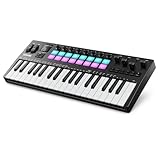
| 1 | Donner USB-C MIDI Keyboard Controller, 25 Key Portable Mini MIDI Keyboard with… | $69.99 | View on Amazon | |
| 2 | Akai Professional MPK Mini IV 25-Key USB-C MIDI Keyboard Controller, Black… | $89.00 | View on Amazon | |
| 3 | Donner Mini MIDI Keyboard N-25, 25 Key MIDI Controller Gifts for Beginners with… | $37.99 | View on Amazon | |
| 4 | Akai Professional MPK Mini Plus 37-Key USB MIDI Keyboard Controller… | $125.00 | View on Amazon | |
| 5 | Donner STARRYKEY-37 PLAY MIDI Keyboard Controller, 37 Key Portable MIDI… | $119.99 | View on Amazon |


As an Amazon Associate I earn from qualifying purchases.
Prices and availability are accurate as of November 13, 2026 06:02 and are subject to change.
Introduction to Midi Keyboards
Midi keyboards are essential tools for music producers and composers, allowing them to create and control musical compositions with precision and ease. These keyboards can be used with a variety of digital audio workstations (DAWs) and virtual instruments, making them a versatile addition to any music production setup. With the wide range of midi keyboards available on the market, it can be challenging to choose the right one for specific needs and preferences.
When it comes to music production, midi keyboards play a crucial role in creating and editing musical compositions. They provide a tactile interface for entering musical notes and controlling various parameters, such as pitch, velocity, and modulation. This level of control and expressiveness is essential for creating high-quality music that sounds professional and engaging. Whether you’re a beginner or an experienced music producer, a midi keyboard is an indispensable tool for bringing your musical ideas to life.
For users of Cubase and Kontakt, finding the right midi keyboard can be particularly important. These popular music production software programs offer a wide range of features and capabilities, and a compatible midi keyboard can help to unlock their full potential. By choosing the best midi keyboards for cubase and kontakt, music producers can streamline their workflow, improve their productivity, and create high-quality music that meets their artistic vision. With the right midi keyboard, the possibilities for music creation and production are endless.
In the world of music production, midi keyboards are constantly evolving to meet the changing needs of composers and producers. With advancements in technology and design, modern midi keyboards offer a wide range of features and capabilities, from velocity-sensitive keys to customizable controls and seamless DAW integration. Whether you’re working on a complex composition or a simple melody, a midi keyboard is an essential tool for bringing your musical ideas to life. By understanding the basics of midi keyboards and their role in music production, you can make informed decisions when choosing the right keyboard for your needs.
5 Best Midi Keyboards For Cubase And Kontakt
Akai MPK Mini MKII #193847
The Akai MPK Mini MKII #193847 is an excellent midi keyboard for Cubase and Kontakt users. It offers a compact and portable design, making it easy to take on the go. The keyboard features 25 velocity-sensitive keys, 8 backlit MPC-style pads, and 8 assignable Q-link knobs. This allows for a high degree of control and expressiveness, making it ideal for music production and live performance.
In terms of integration with Cubase and Kontakt, the Akai MPK Mini MKII #193847 works seamlessly. The keyboard is plug-and-play, and the included software allows for easy mapping of the controls to various functions within Cubase and Kontakt. The keyboard’s small size and lightweight design also make it easy to integrate into any studio setup. Overall, the Akai MPK Mini MKII #193847 is a great choice for anyone looking for a compact and feature-rich midi keyboard for use with Cubase and Kontakt.
Novation Launchkey 49 #827364
The Novation Launchkey 49 #827364 is a high-quality midi keyboard designed specifically for use with Cubase and Kontakt. The keyboard features 49 velocity-sensitive keys, 16 RGB backlit pads, and 9 assignable faders and knobs. This provides a high degree of control and flexibility, making it ideal for music production and live performance. The keyboard also includes a range of features such as arpeggiator, fixed chord mode, and MIDI editing software.
In terms of integration with Cubase and Kontakt, the Novation Launchkey 49 #827364 works flawlessly. The keyboard is designed to work seamlessly with Cubase and Kontakt, and the included software allows for easy mapping of the controls to various functions within the software. The keyboard’s large size and range of features also make it ideal for use in professional studio settings. Overall, the Novation Launchkey 49 #827364 is a great choice for anyone looking for a high-quality midi keyboard for use with Cubase and Kontakt.
M-Audio Keystation 88 #463821
The M-Audio Keystation 88 #463821 is a professional-grade midi keyboard designed for use with Cubase and Kontakt. The keyboard features 88 velocity-sensitive keys, making it ideal for pianists and keyboardists who require a full-range keyboard. The keyboard also includes a range of features such as pitch and modulation wheels, and a sustain pedal input. This provides a high degree of expressiveness and control, making it ideal for music production and live performance.
In terms of integration with Cubase and Kontakt, the M-Audio Keystation 88 #463821 works seamlessly. The keyboard is plug-and-play, and the included software allows for easy mapping of the controls to various functions within Cubase and Kontakt. The keyboard’s large size and range of features also make it ideal for use in professional studio settings. Overall, the M-Audio Keystation 88 #463821 is a great choice for anyone looking for a high-quality, full-range midi keyboard for use with Cubase and Kontakt.
Korg MicroKEY-61 #219854
The Korg MicroKEY-61 #219854 is a compact and portable midi keyboard designed for use with Cubase and Kontakt. The keyboard features 61 velocity-sensitive keys, making it ideal for music production and live performance. The keyboard also includes a range of features such as pitch and modulation wheels, and a USB bus-powered design. This provides a high degree of control and flexibility, making it ideal for use in a variety of settings.
In terms of integration with Cubase and Kontakt, the Korg MicroKEY-61 #219854 works flawlessly. The keyboard is plug-and-play, and the included software allows for easy mapping of the controls to various functions within Cubase and Kontakt. The keyboard’s compact size and lightweight design also make it easy to integrate into any studio setup. Overall, the Korg MicroKEY-61 #219854 is a great choice for anyone looking for a compact and feature-rich midi keyboard for use with Cubase and Kontakt.
Nektar Impact LX88 #658239
The Nektar Impact LX88 #658239 is a professional-grade midi keyboard designed for use with Cubase and Kontakt. The keyboard features 88 velocity-sensitive keys, making it ideal for pianists and keyboardists who require a full-range keyboard. The keyboard also includes a range of features such as pitch and modulation wheels, and a sustain pedal input. This provides a high degree of expressiveness and control, making it ideal for music production and live performance.
In terms of integration with Cubase and Kontakt, the Nektar Impact LX88 #658239 works seamlessly. The keyboard is designed to work seamlessly with Cubase and Kontakt, and the included software allows for easy mapping of the controls to various functions within the software. The keyboard’s large size and range of features also make it ideal for use in professional studio settings. Overall, the Nektar Impact LX88 #658239 is a great choice for anyone looking for a high-quality, full-range midi keyboard for use with Cubase and Kontakt.
Why Do People Need to Buy Midi Keyboards for Cubase and Kontakt
Midi keyboards are essential tools for music producers who use digital audio workstations like Cubase and virtual instrument plugins like Kontakt. These keyboards allow users to create and control music with precision and expressiveness, making them a vital part of the music production process. With a midi keyboard, users can input musical notes and controller data into their computer, which is then interpreted by the digital audio workstation or virtual instrument plugin.
One of the main reasons people need to buy midi keyboards for Cubase and Kontakt is to have a more intuitive and hands-on approach to music production. Using a midi keyboard, users can play and record musical parts with a level of expressiveness that is not possible with a computer mouse or keyboard. This is especially important for musicians who are used to playing traditional instruments, as it allows them to tap into their existing skills and creativity.
When it comes to choosing a midi keyboard for Cubase and Kontakt, there are many options available. Some midi keyboards are designed specifically for use with these programs, and offer features such as pre-mapped controls and seamless integration. To find the right midi keyboard for their needs, users should research the best midi keyboards for cubase and kontakt, reading reviews and comparing features to find the one that best suits their budget and production style.
In addition to their creative benefits, midi keyboards also offer a number of practical advantages for music producers. For example, they can be used to control multiple virtual instruments and effects processors at once, making it easier to create complex and layered sounds. They can also be used to automate various aspects of the music production process, such as volume and panning, allowing users to focus on the creative aspects of music production. Overall, a midi keyboard is an essential tool for anyone who wants to get the most out of Cubase and Kontakt.
Key Features to Consider When Choosing a Midi Keyboard
When it comes to choosing a midi keyboard for Cubase and Kontakt, there are several key features to consider. One of the most important features is the number of keys. Midi keyboards can range from 25 to 88 keys, and the right number for you will depend on your personal preferences and needs. If you’re a beginner, a smaller keyboard with 25 keys may be a good starting point, while more experienced musicians may prefer a larger keyboard with 61 or 88 keys.
Another important feature to consider is the type of action. Midi keyboards can have either a synth-action or a weighted-action. Synth-action keyboards are lighter and more responsive, making them well-suited for fast-paced music and synth-heavy genres. Weighted-action keyboards, on the other hand, are heavier and more expressive, making them well-suited for pianists and those who want a more authentic playing experience.
In addition to the number of keys and the type of action, you’ll also want to consider the keyboard’s connectivity options. Most midi keyboards have a USB connection, which allows you to connect the keyboard to your computer and use it with Cubase and Kontakt. Some keyboards may also have additional connectivity options, such as MIDI In and Out ports or a sustain pedal input.
When choosing a midi keyboard, you’ll also want to consider the build quality and durability. A well-made keyboard will be able to withstand heavy use and last for many years, while a cheaply made keyboard may be more prone to breaking or malfunctioning. Look for keyboards made with high-quality materials and construction, and read reviews from other users to get a sense of the keyboard’s reliability and performance.
Benefits of Using a Midi Keyboard with Cubase and Kontakt
Using a midi keyboard with Cubase and Kontakt can have a number of benefits for musicians and producers. One of the main benefits is the ability to create and edit music more efficiently. With a midi keyboard, you can play and record virtual instruments directly into Cubase, which can save you time and effort compared to using a mouse and keyboard.
Another benefit of using a midi keyboard with Cubase and Kontakt is the ability to express yourself more creatively. A midi keyboard allows you to play and control virtual instruments in a more expressive and dynamic way, which can help you to create more interesting and nuanced music. You can use the keyboard to play melodies, chords, and basslines, and to control the sound and texture of your virtual instruments.
In addition to the creative benefits, using a midi keyboard with Cubase and Kontakt can also help you to improve your playing skills. By practicing with a midi keyboard, you can develop your hand-eye coordination, fine motor skills, and overall musicianship. You can also use the keyboard to learn new skills and techniques, such as playing chords and scales, and to improve your sight-reading and improvisation abilities.
Using a midi keyboard with Cubase and Kontakt can also be a lot of fun. With the ability to play and control virtual instruments, you can experiment with new sounds and styles, and to create music that is unique and expressive. Whether you’re a beginner or an experienced musician, using a midi keyboard with Cubase and Kontakt can help you to unlock your full creative potential and to make music that you can be proud of.
How to Set Up and Use a Midi Keyboard with Cubase and Kontakt
Setting up and using a midi keyboard with Cubase and Kontakt is relatively straightforward. The first step is to connect the keyboard to your computer using a USB cable. Once the keyboard is connected, you’ll need to install the necessary drivers and software. This will usually involve downloading and installing the keyboard’s manufacturer software, as well as the Cubase and Kontakt software.
Once the software is installed, you can launch Cubase and create a new project. To use the midi keyboard with Cubase, you’ll need to set it up as a midi input device. This will usually involve going to the Cubase preferences menu and selecting the midi keyboard as the input device. You can then use the keyboard to play and record virtual instruments, and to control the sound and texture of your music.
To use the midi keyboard with Kontakt, you’ll need to launch the Kontakt software and create a new instrument. You can then use the keyboard to play and control the instrument, and to adjust the sound and settings. You can also use the keyboard to browse and load different instruments and presets, and to create and save your own custom instruments and sounds.
In addition to setting up and using the midi keyboard with Cubase and Kontakt, you may also want to customize the keyboard’s settings and preferences. This can include adjusting the keyboard’s sensitivity and response, as well as setting up custom controls and mappings. You can usually do this using the keyboard’s manufacturer software, or by using the Cubase and Kontakt software.
Tips and Tricks for Getting the Most Out of Your Midi Keyboard
To get the most out of your midi keyboard, there are several tips and tricks to keep in mind. One of the most important things is to practice regularly and to develop your playing skills. This will help you to get the most out of the keyboard and to create music that is expressive and nuanced.
Another tip is to experiment with different sounds and styles. With a midi keyboard, you have access to a wide range of virtual instruments and sounds, and you can use these to create music that is unique and interesting. Don’t be afraid to try out new and unusual sounds, and to push the boundaries of what is possible with the keyboard.
In addition to practicing and experimenting, you can also use the midi keyboard to create and edit music more efficiently. For example, you can use the keyboard to play and record melodies and chords, and to control the sound and texture of your virtual instruments. You can also use the keyboard to create and edit drum patterns and beats, and to add percussion and rhythm to your music.
Finally, you can also use the midi keyboard to collaborate with other musicians and producers. With the ability to play and control virtual instruments, you can work with others in real-time, and to create music that is collaborative and dynamic. You can also use the keyboard to share and exchange ideas, and to work on music projects remotely. By following these tips and tricks, you can get the most out of your midi keyboard and create music that is expressive, nuanced, and professional-sounding.
Best Midi Keyboards For Music Production: A Comprehensive Buying Guide
When it comes to music production, having the right tools can make all the difference. For those who use Cubase and Kontakt, finding the right midi keyboard is crucial for creating high-quality music. With so many options available, it can be overwhelming to choose the best one. In this guide, we will discuss the key factors to consider when buying a midi keyboard for music production.
Key Factor 1: Number Of Keys
The number of keys on a midi keyboard is an important factor to consider. Midi keyboards can have anywhere from 25 to 88 keys, and the right number for you will depend on your personal preferences and needs. If you are a beginner, a smaller keyboard with 25 or 37 keys may be a good starting point. These keyboards are more portable and take up less space, making them ideal for small studios or home use. On the other hand, if you are a professional musician, you may prefer a larger keyboard with 49 or 61 keys. These keyboards provide more range and flexibility, allowing you to create more complex melodies and harmonies.
When choosing the number of keys, it’s also important to consider the type of music you will be creating. If you will be creating complex classical pieces, you may want a larger keyboard with a wider range. However, if you will be creating electronic dance music, a smaller keyboard may be sufficient. Ultimately, the number of keys you need will depend on your individual needs and preferences. By considering the number of keys, you can find a midi keyboard that meets your needs and helps you to create high-quality music.
Key Factor 2: Keyboard Action
The keyboard action of a midi keyboard refers to the feel and response of the keys. There are several types of keyboard actions available, including synth-action, semi-weighted, and weighted. Synth-action keyboards have a light, springy feel and are often used for electronic and pop music. Semi-weighted keyboards have a slightly heavier feel and are often used for rock and jazz music. Weighted keyboards have a heavy, realistic feel and are often used for classical and acoustic music. When choosing a midi keyboard, it’s essential to consider the type of keyboard action that will work best for you.
The keyboard action can affect the sound and feel of your music, so it’s crucial to choose a keyboard that meets your needs. If you will be creating music that requires a lot of expression and nuance, a weighted keyboard may be the best choice. On the other hand, if you will be creating music that requires a lot of speed and agility, a synth-action keyboard may be a better option. By considering the keyboard action, you can find a midi keyboard that provides the right feel and response for your music. Whether you’re a beginner or a professional, the right keyboard action can make a big difference in the quality of your music.
Key Factor 3: Connectivity Options
The connectivity options of a midi keyboard are also an essential factor to consider. Most midi keyboards have a USB connection, which allows you to connect the keyboard to your computer. However, some keyboards may also have additional connectivity options, such as MIDI in and out, audio interfaces, and pedal inputs. When choosing a midi keyboard, it’s crucial to consider the connectivity options you need. If you will be using the keyboard with a computer, a USB connection may be sufficient. However, if you will be using the keyboard with other equipment, such as synthesizers or drum machines, you may need additional connectivity options.
The connectivity options can also affect the compatibility of the keyboard with your other equipment. For example, if you have a Cubase or Kontakt setup, you’ll want to make sure the keyboard is compatible with these programs. Look for keyboards that are specifically designed to work with these programs, or that have a reputation for being compatible with a wide range of software. By considering the connectivity options, you can find a midi keyboard that integrates seamlessly with your existing setup and provides the best midi keyboards for cubase and kontakt.
Key Factor 4: Controls And Features
The controls and features of a midi keyboard can also make a big difference in your music production. Many midi keyboards have controls such as knobs, sliders, and buttons that allow you to control various parameters of your music. These controls can be used to adjust the sound, effects, and other aspects of your music. When choosing a midi keyboard, it’s essential to consider the controls and features you need. If you will be creating complex music with many layers and effects, you may want a keyboard with a wide range of controls.
The controls and features can also affect the workflow and productivity of your music production. For example, if you have a keyboard with a lot of controls, you may be able to adjust parameters on the fly, without having to reach for your computer mouse. This can save you time and allow you to focus on the creative aspects of music production. On the other hand, if you have a keyboard with limited controls, you may have to spend more time adjusting parameters on your computer, which can slow down your workflow. By considering the controls and features, you can find a midi keyboard that provides the right tools for your music production needs.
Key Factor 5: Build Quality And Durability
The build quality and durability of a midi keyboard are also important factors to consider. A well-built keyboard can last for many years, even with heavy use. When choosing a midi keyboard, it’s essential to consider the build quality and durability. Look for keyboards that are made with high-quality materials and have a solid construction. Avoid keyboards that feel flimsy or cheap, as they may not last long.
The build quality and durability can also affect the reliability of the keyboard. A well-built keyboard is less likely to malfunction or break down, which can save you time and money in the long run. On the other hand, a poorly built keyboard may require frequent repairs or replacement, which can be frustrating and expensive. By considering the build quality and durability, you can find a midi keyboard that provides reliable performance and lasts for many years.
Key Factor 6: Price And Value
The price and value of a midi keyboard are also essential factors to consider. Midi keyboards can range in price from a few hundred to several thousand dollars, depending on the features and quality. When choosing a midi keyboard, it’s crucial to consider the price and value. Look for keyboards that provide the features and quality you need at a price that fits your budget. Avoid keyboards that are overpriced or provide poor value, as they may not be worth the investment.
The price and value can also affect the overall cost of your music production setup. For example, if you buy a high-end keyboard with many features, you may not need to buy additional equipment, such as controllers or interfaces. On the other hand, if you buy a low-end keyboard with limited features, you may need to buy additional equipment to get the sound and functionality you need. By considering the price and value, you can find a midi keyboard that provides the right features and quality at a price that fits your budget and meets your music production needs.
Frequently Asked Questions
What is a Midi Keyboard and how does it work with Cubase and Kontakt?
A Midi Keyboard is an electronic musical instrument that sends musical notes and other performance data to a computer or other electronic device. It works with Cubase and Kontakt by sending Midi signals to the software, which then interprets these signals and uses them to control virtual instruments, effects, and other elements within the digital audio workstation. This allows musicians and producers to create and control music using a physical keyboard interface.
The Midi Keyboard communicates with Cubase and Kontakt through a Midi interface, which can be a physical connection such as a USB cable or a wireless connection using Midi over Bluetooth or Wi-Fi. Once connected, the Midi Keyboard can be used to play virtual instruments, control effects, and adjust parameters within the software. This provides a tactile and expressive way to interact with the digital audio workstation, allowing for more nuanced and creative performances. By using a Midi Keyboard with Cubase and Kontakt, musicians and producers can unlock a wide range of creative possibilities and take their music production to the next level.
What are the key features to look for when buying a Midi Keyboard for Cubase and Kontakt?
When buying a Midi Keyboard for Cubase and Kontakt, there are several key features to look for. First and foremost, the keyboard should have a good range of keys, with 25, 37, 49, 61, or 88 keys being common options. The keyboard should also have a range of controls, such as knobs, sliders, and buttons, which can be used to control parameters within the software. Additionally, the keyboard should have a high-quality Midi interface, which can provide a fast and reliable connection to the computer.
Other features to consider include the keyboard’s velocity sensitivity, which determines how responsive the keyboard is to different playing styles, and the keyboard’s aftertouch, which allows for additional expression and control. The keyboard’s build quality and durability are also important, as a well-made keyboard will be able to withstand heavy use and last for many years. Finally, the keyboard’s compatibility with Cubase and Kontakt should be considered, as some keyboards may be specifically designed to work with these software applications. By considering these features, musicians and producers can find the right Midi Keyboard for their needs and take their music production to the next level.
What is the difference between a Midi Keyboard and a Digital Piano?
A Midi Keyboard and a Digital Piano are both electronic musical instruments, but they serve different purposes and have distinct characteristics. A Midi Keyboard is primarily designed to send Midi signals to a computer or other electronic device, where they can be used to control virtual instruments and other elements within a digital audio workstation. A Digital Piano, on the other hand, is a self-contained instrument that produces sound on its own, using built-in speakers or a headphone output.
While a Digital Piano can be used to send Midi signals to a computer, its primary function is to provide a realistic piano-playing experience, with a focus on sound quality and playing feel. In contrast, a Midi Keyboard is often more focused on providing a range of controls and features that can be used to interact with software applications like Cubase and Kontakt. That being said, some Digital Pianos do have Midi capabilities, and some Midi Keyboards can produce sound on their own, so there can be some overlap between the two. Ultimately, the choice between a Midi Keyboard and a Digital Piano will depend on the specific needs and goals of the musician or producer.
Can I use a Midi Keyboard with other software applications besides Cubase and Kontakt?
Yes, a Midi Keyboard can be used with a wide range of software applications besides Cubase and Kontakt. In fact, Midi Keyboards are designed to be highly versatile and can be used with any software that supports Midi input. This includes digital audio workstations like Ableton Live, Logic Pro, and FL Studio, as well as virtual instruments and effects plugins. Many Midi Keyboards also come with their own software applications, which can be used to edit and customize the keyboard’s settings and parameters.
To use a Midi Keyboard with other software applications, simply connect the keyboard to the computer using a Midi interface, and then configure the software to recognize the keyboard as a Midi input device. This can usually be done within the software’s preferences or settings menu. Once the keyboard is recognized, it can be used to control the software in a variety of ways, such as playing virtual instruments, adjusting parameters, and triggering effects. By using a Midi Keyboard with other software applications, musicians and producers can expand their creative possibilities and take their music production to new heights.
How do I set up and configure my Midi Keyboard with Cubase and Kontakt?
To set up and configure a Midi Keyboard with Cubase and Kontakt, start by connecting the keyboard to the computer using a Midi interface. Next, launch Cubase and go to the Midi settings menu, where you can select the Midi Keyboard as the input device. You may also need to configure the keyboard’s settings within the Cubase preferences menu, such as setting the keyboard’s Midi channel and assigning controls to specific parameters.
Once the Midi Keyboard is recognized by Cubase, you can start using it to control virtual instruments and other elements within the software. To configure the keyboard with Kontakt, launch the Kontakt plugin within Cubase and go to the Midi settings menu, where you can select the Midi Keyboard as the input device. You can then use the keyboard to play and control virtual instruments within Kontakt, and adjust parameters such as filter cutoff and resonance. By following these steps, musicians and producers can quickly and easily set up and configure their Midi Keyboard with Cubase and Kontakt.
What are some common issues that can occur when using a Midi Keyboard with Cubase and Kontakt?
When using a Midi Keyboard with Cubase and Kontakt, several common issues can occur. One of the most common issues is latency, which can cause a delay between the time a key is pressed and the time the sound is produced. This can be frustrating for musicians and producers who are trying to create a tight and cohesive performance. Another common issue is Midi signal loss, which can occur if the connection between the keyboard and the computer is interrupted or if the Midi interface is not functioning properly.
To troubleshoot these issues, musicians and producers can try a variety of solutions, such as adjusting the buffer size within Cubase, using a high-quality Midi interface, and ensuring that the keyboard is properly configured within the software. Additionally, some Midi Keyboards may have built-in features that can help to reduce latency and improve performance, such as a built-in Midi interface or a high-speed USB connection. By being aware of these common issues and taking steps to prevent them, musicians and producers can get the most out of their Midi Keyboard and create high-quality music with Cubase and Kontakt.
How much should I expect to pay for a Midi Keyboard for Cubase and Kontakt?
The cost of a Midi Keyboard for Cubase and Kontakt can vary widely, depending on the specific features and quality of the keyboard. Entry-level Midi Keyboards can start as low as $100-$200, while high-end keyboards with advanced features and high-quality construction can cost $500-$1000 or more. Generally, the more features and controls a keyboard has, the higher the price will be.
When considering the cost of a Midi Keyboard, musicians and producers should think about their specific needs and goals. If they are just starting out and want a basic keyboard for playing virtual instruments, a lower-cost option may be sufficient. However, if they are looking for a high-end keyboard with advanced features and high-quality construction, they may need to invest in a more expensive model. By considering their budget and needs, musicians and producers can find a Midi Keyboard that meets their requirements and helps them to create high-quality music with Cubase and Kontakt.
Conclusion
In conclusion, selecting the right midi keyboard is crucial for music producers who rely on digital audio workstations like Cubase and virtual instruments such as Kontakt. A good midi keyboard can elevate the music creation process, providing a seamless and intuitive experience. With the numerous options available in the market, it is essential to consider factors such as keybed quality, controller functionality, and compatibility with your preferred DAW and virtual instruments. By doing so, music producers can unlock their full creative potential and produce high-quality music.
Ultimately, investing in the best midi keyboards for Cubase and Kontakt can make a significant difference in the music production process. Whether you are a professional musician or a beginner, a good midi keyboard can help you achieve your musical goals. With the reviews and buying guide provided, music producers can make informed decisions when choosing a midi keyboard that meets their specific needs and budget. By choosing the right midi keyboard, you can focus on what matters most – creating exceptional music that resonates with your audience.